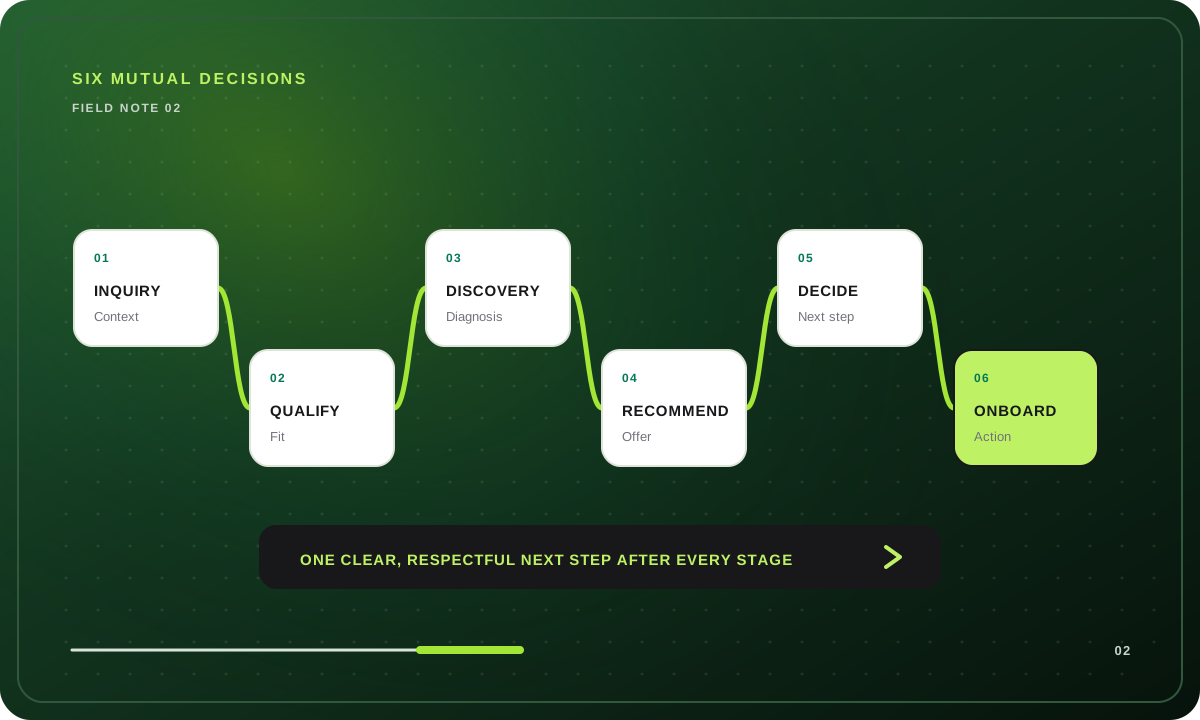
A healthy coaching sales process is a sequence of mutual decisions. The prospect learns whether your approach fits their situation, and you learn whether you can responsibly help.
The process does not need aggressive scripts. It needs clear stages, enough context before the call, and an honest next step after every outcome. If every stage ends with “book another call,” the process is mostly a calendar with ambitions.
The six-stage coaching sales process
| Stage | Main question | Useful output |
|---|---|---|
| Inquiry | What prompted this person to reach out? | structured context |
| Pre-qualification | Is the need, timing, and format broadly compatible? | route or review |
| Discovery | What is happening, what is desired, and what blocks progress? | shared diagnosis |
| Recommendation | Is there a suitable engagement? | specific offer or alternative |
| Decision | What does the prospect need to decide? | yes, no, or dated follow-up |
| Onboarding | What must be true before the work starts? | expectations and first actions |
Each stage should do one job. If the inquiry form tries to complete discovery, it becomes exhausting. If the discovery call repeats basic facts already submitted, it feels careless.
Stage 1: capture the reason for the inquiry
Ask what outcome the prospect wants, what they have already tried, and why the issue matters now. Use plain language. A single thoughtful open question often provides more context than a page of generic checkboxes.
Collect only the personal data you need to respond. Save sensitive history for an appropriate private conversation if it is genuinely necessary for the coaching service.
Stage 2: pre-qualify without pretending to diagnose
Pre-qualification can identify practical fit:
- the kind of support requested;
- whether you work with that audience;
- timing and availability;
- preferred format or location;
- a comfortable investment range;
- willingness to do the work your method requires.
It should not diagnose health, guarantee an outcome, or punish someone for an answer. A “not now” route can still be respectful: explain the mismatch, suggest a resource, or offer a future check-in.
When answers require context, an AI qualifier can apply your written policy. Deterministic choices remain better for hard boundaries such as geography, service type, or scheduling constraints.
Stage 3: run discovery as a real conversation
Use the submitted answers to prepare. Start by reflecting what you understood and asking what has changed since the form was completed.
A focused discovery call explores:
- the current situation;
- the desired change;
- the consequence of leaving things as they are;
- previous attempts and what was learned;
- practical constraints;
- how the prospect makes a decision.
Do not turn this into an interrogation. The purpose is a shared understanding, not the maximum possible amount of information.
Stage 4: recommend only what fits
A recommendation should connect the prospect's situation to a specific engagement. State the scope, cadence, responsibilities, price, and what is not included.
If there is no fit, say so. A direct “I do not think this offer is the right next step” can build more trust than a vague follow-up sequence. When another resource or professional is more appropriate, offer that direction without implying an endorsement you cannot verify.
Stage 5: make the decision easy to understand
End the call with one agreed next step. That might be a proposal, a short follow-up question, a second conversation with another decision-maker, or a clear no.
Avoid artificial deadlines. If availability is genuinely limited, state the real constraint and the date it applies. Record the decision and any promised follow-up so the prospect does not have to restart the conversation.
Stage 6: carry context into onboarding
Once someone becomes a client, do not ask them to re-enter everything. Reuse the appropriate discovery context, confirm consent for anything sensitive, and ask only what is newly required for the engagement.
Frequently asked questions
What are the stages of a coaching sales process?
A practical sequence is inquiry, pre-qualification, discovery, recommendation, decision, and onboarding. Each stage should answer one main question and end with a clear next step.
Should every coaching inquiry lead to a discovery call?
No. A discovery call is useful when the request, timing, format, and practical fit support a real conversation. Other inquiries may need clarification, a later follow-up, a resource, or a respectful out-of-scope response.
Can AI help qualify coaching inquiries?
AI can compare open answers with criteria written by the coach, while exact boundaries remain deterministic. Preserve a manual-review option and an automatic fallback, especially when answers are sensitive or incomplete.
Build the intake and routing layer
Qualyo can handle the inquiry and pre-qualification stages on one visual route graph. Use conversational presentation when you want one question at a time, or classic presentation when the buyer should scan the full form.
Connect qualified prospects to a booking page, send uncertain cases to review, and give every other route a useful ending. Start with the coach lead qualification guide, browse templates, or read the pre-qualification question checklist.
Sources
External references used for this guide. Product details are checked against the current Qualyo implementation.
- What Is Consultative Sales? 5 Guiding Principles: SalesforceAccessed August 5, 2026
- Lead qualification: Gauging whether a lead aligns with your offering: HubSpotAccessed August 5, 2026