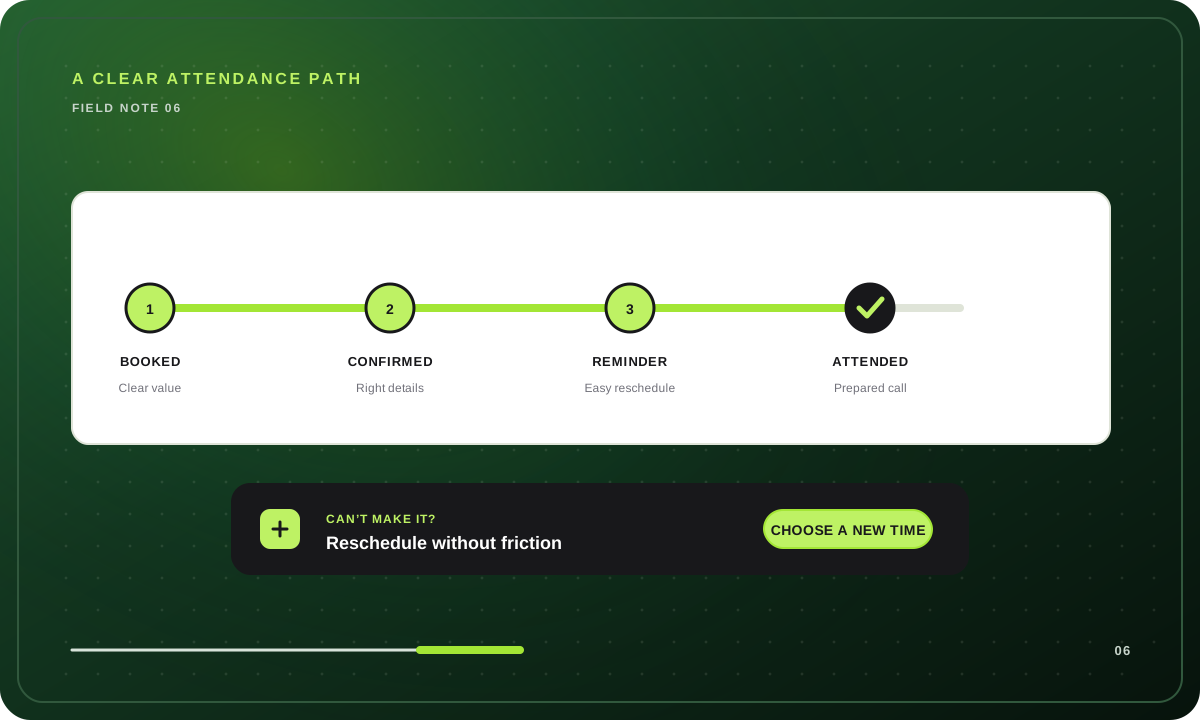
Discovery call no-shows are not solved by sending the same reminder more often. The full path matters: why the person booked, how far away the meeting is, whether the value is clear, whether the time still works, and how easy it is to reschedule.
Measure attendance, then improve the highest-friction part of the path. Otherwise the calendar is just sending increasingly urgent emails into the void.
Establish a clean baseline
Track:
- calls booked;
- calls attended;
- calls rescheduled before the start time;
- calls cancelled;
- calls marked no-show;
- days between booking and meeting;
- source and form route.
Define a no-show consistently. A person who reschedules in advance is not the same as someone who disappears. Keep raw counts next to percentages, especially when the volume is small.
Make the meeting worth booking
The booking page should state what the call is for, who it helps, how long it takes, and what the prospect will leave with. “Quick chat” is vague. “A 25-minute fit and planning call to understand your project and decide the most useful next step” sets a clearer expectation.
Do not promise a proposal, diagnosis, or custom strategy if the meeting cannot reliably provide it.
Pre-qualify before showing the calendar
A short inquiry route can confirm that the meeting type matches the request. This prevents someone from booking a sales call when they need support, partnership information, or a service you do not offer.
Ask only what improves the meeting:
- desired outcome;
- current problem;
- timing;
- one or two fit constraints;
- contact details.
Use the answers in the confirmation and preparation. If the seller asks the prospect to repeat the form from the beginning, the form created work without creating value.
Reduce unnecessary delay
Long booking delays create more time for priorities to change. Offer the earliest realistic slots while preserving preparation time. If availability is routinely far away, consider:
- reserving specific discovery windows;
- routing high-priority requests differently;
- using a short review before inviting someone;
- providing a useful interim resource;
- opening a waitlist instead of presenting an unsuitable date.
Do not manufacture scarcity. Show the availability you can actually honor.
Design a reminder sequence
A practical sequence can include:
- immediate confirmation with calendar details and rescheduling link;
- a preparation note after booking;
- a reminder one day before;
- a shorter reminder near the meeting.
The exact cadence depends on how far away the call is. A meeting booked for tomorrow does not need the same sequence as one booked three weeks ahead.
Every message should identify the sender, meeting purpose, date and time zone, location or call link, and an easy way to reschedule or cancel. Obtain the permissions required for email or text messaging in the regions where you operate.
Ask for a small commitment
A useful pre-call question creates preparation, not compliance theater. Ask the prospect to confirm one priority, review a short agenda, or bring a relevant fact.
Avoid long homework. The first interaction should not demand free consulting work from the prospect.
Make rescheduling easier than disappearing
Put the reschedule and cancellation link in every reminder. If a person can no longer attend, a clear exit protects both calendars and produces better data.
After a no-show, send one neutral follow-up. Confirm that the meeting was missed, offer a reschedule route if appropriate, and state what happens next. Do not use shame or fake urgency.
Review no-shows by route
A high no-show rate from one campaign may indicate weak intent. A high rate after one form route may indicate that the qualification criteria are too permissive. A high rate for meetings booked more than ten days ahead may point to availability rather than lead quality.
Change one part of the system, annotate the date, and watch both attendance and downstream quality. Increasing attendance is not useful if the added calls are a poor fit.
Frequently asked questions
What is a good discovery call no-show rate?
There is no universal rate for every audience and booking path. Define a no-show consistently, keep raw counts beside percentages, and compare stable segments such as source, form route, and booking delay.
How many reminders should a discovery call receive?
Use the smallest sequence that keeps the meeting details and rescheduling path clear. An immediate confirmation, a reminder one day before, and a shorter reminder near the meeting can work, but the cadence should reflect how far away the call is.
What should happen after a discovery call no-show?
Send one neutral follow-up that confirms the missed meeting, offers a reschedule route when appropriate, and explains what happens next. Avoid shame, fake urgency, or an endless reminder sequence.
Build a deliberate booking route
In Qualyo, connect a qualified outcome to a calendar router and send other outcomes to a useful end or review path. The same graph can collect context, apply deterministic rules, optionally evaluate written answers, and explain the next step.
See how to pre-qualify before discovery, measure the whole discovery-call path, or start from a template.
Sources
External references used for this guide. Product details are checked against the current Qualyo implementation.
- How to mark no-shows for meetings: CalendlyAccessed August 5, 2026
- How to send text messages with Workflows: CalendlyAccessed August 5, 2026